Area guide · E14
Canary Wharf
Tower living, dockside walks and the fastest commute in London — a guide for renters deciding if E14 fits.
Area guide · E14
Tower living, dockside walks and the fastest commute in London — a guide for renters deciding if E14 fits.
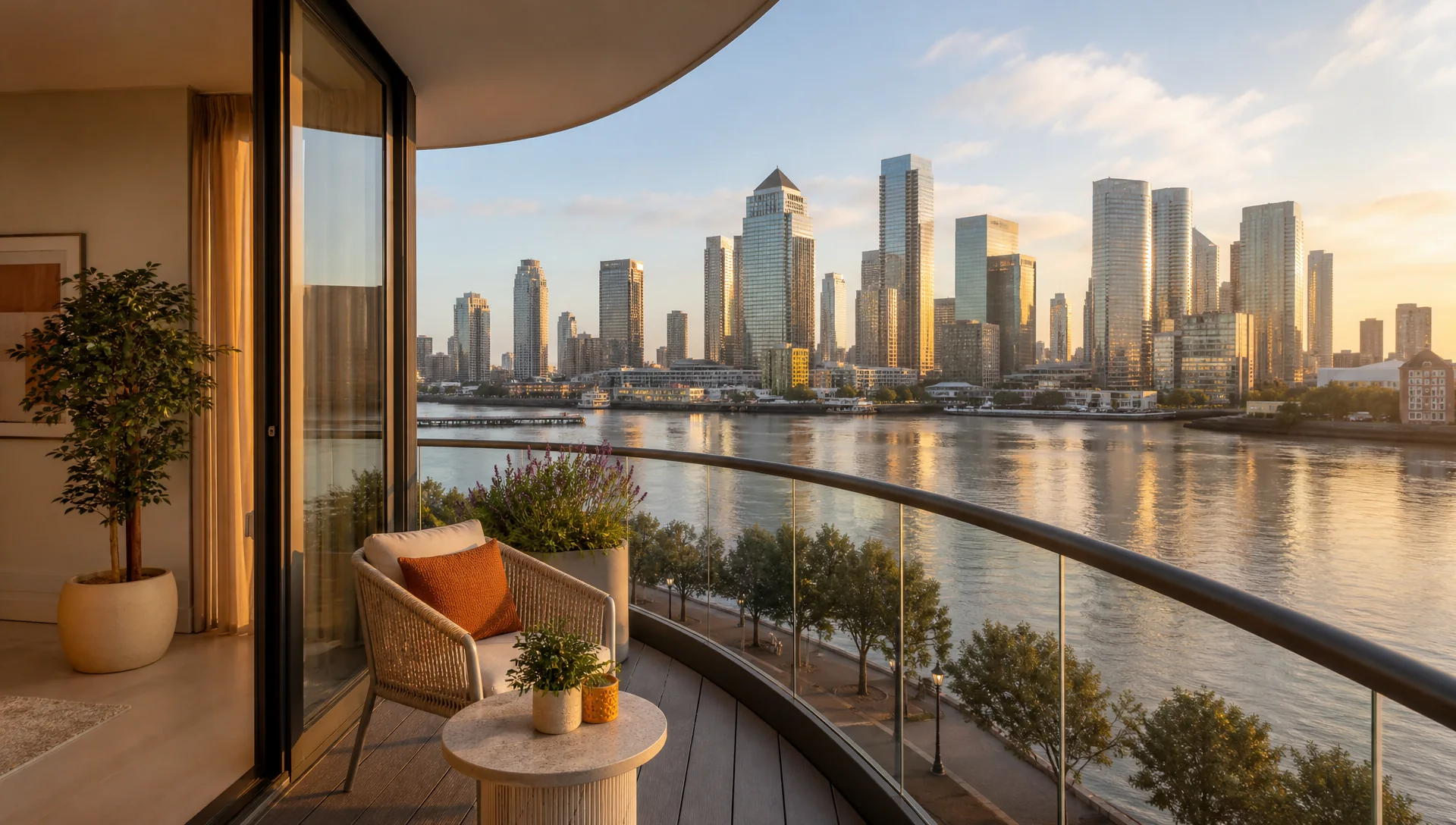
Canary Wharf is the piece of London that grew up fastest. Forty years of docks and warehouses became a financial district of glass towers, and then, more quietly, became somewhere people actually live: supermarkets that open late, dockside paths for the morning run, and an increasing share of schools, clinics and green space threaded between the towers. For renters it offers something rare: modern, well-managed buildings with lifts, concierges and parcel rooms, at rents that still undercut equivalent spec in Zone 1.
The geography matters. The estate itself, around the shopping malls and the Elizabeth line station, is high-rise and buzzy. South of it, Wood Wharf adds newer residential towers with water on three sides. West along the Isle of Dogs, streets toward Limehouse approach the marina and go noticeably calmer; east past South Quay the towers thin and the DLR takes over. Pick the micro-location first: fifteen minutes apart, the moods are completely different.
Homes here skew modern: new-build studios and one-beds in the towers, larger duplexes and family flats in Wood Wharf and the riverside blocks. Expect lifts, bike storage, concierge desks and gyms in the better buildings, and service charges that landlords pass into rent, which is why a two-bed here can cost more than a Victorian house in Greenwich. The upside is EPC-friendly heating bills, secure entry and parcel handling that actually works for people who order everything.
The social rhythm surprises people. Weekdays are commuter-fast: stations pulse between eight and nine, the malls refill at lunch, and by evening the wharf empties to residents and restaurant workers. Weekends are calm, which families come to love: the docks are traffic-free for cycling, Mudchute farm is a fifteen-minute walk, and the Thames path runs all the way to Greenwich without crossing a road.
The Elizabeth line changed everything here: Canary Wharf to the West End in about twenty minutes, to Paddington under thirty, and to Bond Street without changing. The Jubilee line adds fast hops to Stratford, London Bridge and Westminster. The DLR threads the Isle of Dogs to Bank and Greenwich, and the river bus runs a genuinely useful commuter service from the piers to central piers in high season. Cyclists get the traffic-free dock paths; drivers get the Blackwall Tunnel's moods, which is the one honest downside.
As indicative demonstration ranges: studios around £1,550–1,800, one-beds £1,900–2,300, two-beds £2,600–3,300 and larger family units from £3,400, monthly. Riversides and high floors carry premiums; older blocks inland from the towers are where value hides. New-build means EPC-friendly bills; period homes are rare here, which is exactly why people who want them cross to Greenwich or Limehouse.
Tell us your budget and move date. We will send current availability and honest micro-location advice for the docks.